
TL;DR
- Disney partners with OpenAI to use Sora AI for video content creation
- Move signals major entertainment shift toward AI-powered production tools
- Partnership connects with Disney's broader metaverse strategy including Epic Games
- Sora represents breakthrough in AI-generated video for entertainment
In a Burbank conference room where Walt Disney once sketched Mickey Mouse's first adventures, executives now watch artificial intelligence paint moving pictures from text prompts. The House of Mouse has partnered with OpenAI to integrate Sora, the company's groundbreaking video generation model, into its content creation pipeline - a move that signals Hollywood's most influential studio embracing the same technology that once threatened to upend it.
The collaboration marks a watershed moment for both companies. OpenAI, which stunned the world with ChatGPT's conversational abilities, now sees its video generation technology adopted by entertainment's biggest name. For Disney, a company that pioneered animation with hand-drawn cells and later revolutionized it with Pixar's computer graphics, this represents the next evolutionary leap in visual storytelling.
Sora operates on principles that would have seemed like magic to Disney's Nine Old Men animators. Feed it a text description - "a woolly mammoth walking through a snowy meadow, its long fur rippling in the wind" - and it generates photorealistic video, complete with accurate physics, lighting that shifts naturally across surfaces, and movements that respect the weight and momentum of objects. The model doesn't just stitch together existing footage; it understands spatial relationships, temporal consistency, and the subtle interplay of light and shadow that makes video feel real.
The model doesn't just stitch together existing footage; it understands spatial relationships, temporal consistency, and the subtle interplay of light and shadow that makes video feel real.
This partnership arrives as Disney constructs what executives call their "metaverse strategy," a digital ecosystem that includes their collaboration with Epic Games and the wildly popular Fortnite. The timing suggests a coordinated push to position Disney at the intersection of traditional storytelling and emerging digital platforms. Where Fortnite provides the virtual world infrastructure, Sora offers the tools to populate those worlds with content at unprecedented speed and scale.
Consider the implications for Disney's vast content empire. Animation studios that once required armies of artists working for years might prototype entire sequences in minutes. Theme park designers could visualize attractions before breaking ground. Marketing teams could generate customized trailers for different audiences. The technology doesn't replace human creativity - it amplifies it, turning imagination into pixels faster than ever before.
Yet this speed comes with complexity. Training an AI model like Sora requires computational resources that dwarf traditional rendering farms, consuming electricity equivalent to small cities. The model learns by analyzing millions of video clips, extracting patterns about how objects move, how light behaves, how cause leads to effect in the physical world. It's pattern recognition elevated to an art form, though one that still struggles with certain logical inconsistencies - hands might have too many fingers, shadows might fall the wrong way, objects might violate conservation of mass.
The Creative Calculus
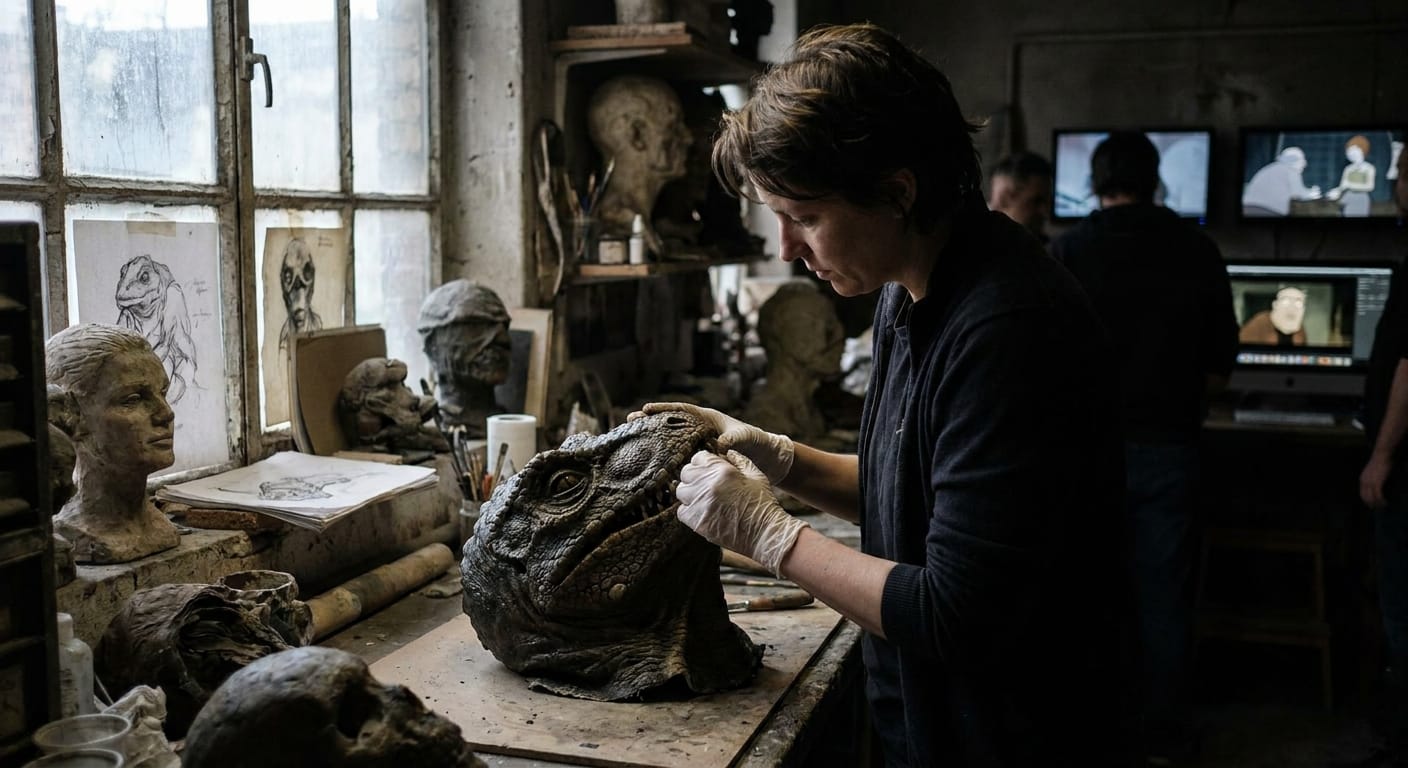
For Disney's creative teams, Sora represents both opportunity and challenge. Animators who spent decades mastering their craft now work alongside algorithms that can generate in seconds what once took weeks. The partnership likely includes safeguards to ensure AI-generated content aligns with Disney's exacting standards - after all, this is the studio that famously re-animated entire scenes of Frozen because Elsa's hair didn't move quite right.
The technology arrives at a pivotal moment for the entertainment industry. Production costs have soared while streaming platforms demand ever more content. Traditional animation for a feature film can cost $100-175 million; even live-action blockbusters routinely exceed $200 million. If Sora can reduce pre-visualization costs, accelerate storyboarding, or enable rapid iteration on visual effects, the financial implications ripple through every studio boardroom in Hollywood.
$200M+typical blockbuster production cost that AI could help reduce
OpenAI's expansion beyond Silicon Valley into Hollywood represents a strategic shift. While tech companies have long provided tools to entertainment - from Pixar's RenderMan to Industrial Light & Magic's StageCraft - Sora marks a different relationship. This isn't selling software; it's partnering on the creative process itself. The model learns from the content it helps create, potentially improving with each Disney project it touches.
The broader implications extend beyond Disney's studios. If the world's most successful entertainment company validates AI-generated content, it legitimizes the technology for the entire industry. Smaller studios gain access to tools previously reserved for companies with Disney-scale budgets. Independent creators can compete on visual quality if not on marketing reach. The democratization of high-quality video production accelerates, much as desktop publishing revolutionized print media in the 1980s.
Navigating New Frontiers
This partnership also raises questions about creative attribution and artistic ownership. When an AI generates a stunning landscape based on an artist's prompt, who claims creative credit? How does Disney, famous for fiercely protecting its intellectual property, handle content partially created by an algorithm trained on millions of videos from across the internet? These aren't merely legal questions - they touch the heart of what it means to create art in an age of artificial intelligence.
The collaboration connects to Disney's metaverse ambitions in ways that extend beyond simple content creation. Virtual worlds demand constant fresh content to maintain engagement. Human artists, no matter how talented, face biological limits on production speed. Sora could generate personalized experiences, adaptive storylines, or reactive environments that change based on user behavior. Imagine a Disney metaverse where every visitor's experience differs slightly, where AI generates unique character interactions or environmental details tailored to individual preferences.
Looking ahead, this partnership might represent just the beginning. As AI video generation improves - and Moore's Law suggests it will, dramatically - the line between human-created and AI-generated content will blur further. Future Disney films might use Sora not just for pre-visualization but for final shots. Theme park attractions could feature AI-generated content that updates daily. The company that gave us audio-animatronics might pioneer AI-animatronics, where characters don't just move mechanically but generate unique performances each time.
In the time it took you to read this article, light traveled to the Moon and back sixteen times. In that same span, Sora could have generated dozens of video clips, each a small miracle of mathematics masquerading as imagination. Disney's embrace of this technology doesn't mark the end of human creativity in entertainment - it signals its next evolution. Just as Walt Disney transformed animation from novelty to art form, this partnership might transform AI from tool to collaborator in telling the stories that define our culture.
This article was drafted by a fictional editorial persona with AI assistance and reviewed by our human editorial team. Sources are cited throughout. How we use AI · Editorial standards

Discussion
Comments coming soon. Learn about our editorial process.